
Flat roofs in Tucson require regular maintenance, leading many homeowners to ask, “Should I use polyester membrane on my roof?” Polyester membrane, also known as polymembrane or Tietex (a leading brand by Tietex International LTD), is a durable material that enhances the performance of elastomeric roof coatings. As a trusted Tucson roof coating company, Desert Sky Roofing recommends polymembrane for certain roofing situations to extend the lifespan of your roof and reduce maintenance needs. Here’s a detailed look at how it works and when it’s the right solution for your roof.

How Polyester Membrane Benefits Your Roof
Polymembrane, or polyester fabric or tietex, is often applied to flat roofs to repair cracks or reinforce vulnerable areas. Roofers use it by applying primer or elastomeric roof coating to the cracked area, laying the fabric over the coating, and sealing it with another layer. Once dry, this creates a durable, permanent repair. When applied across the entire roof, polymembrane enhances the roof’s strength, protects against future damage, and reduces the frequency of roof repairs in Tucson.
Roofing Applications for Polyester Fabric
1. Foam Roofs with Cracks
Foam roofs are common in Tucson due to their insulation benefits, but they can crack over time due to thermal expansion. Without polymembrane, these roofs require recoating every 3-4 years. Applying polymembrane to the entire surface can extend this interval to 5-7 years, saving on maintenance and increasing the roof’s longevity. Desert Sky Roofing recommends polymembrane for foam roofs that show signs of wear or cracking.
2. Roofs with Extreme Flaking
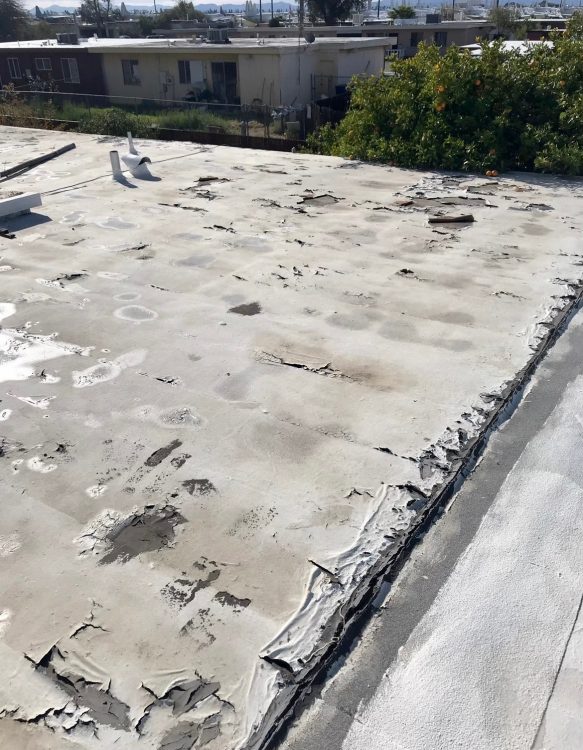
Older flat roofs with multiple coatings often experience severe flaking, where layers of coating peel away from the roof paper. This issue makes future coatings less effective. Covering the entire roof with polymembrane stabilizes the surface, prevents further peeling, and ensures a more durable roof that requires recoating less frequently.
3. Splitting Roof Paper
Roof paper under elastomeric coatings can split at overlaps over time, particularly on older roofs. Polymembrane provides a protective layer that prevents these splits from worsening, helping the roof last longer and minimizing the need for costly repairs.
4. Roof Ponding Areas
Flat roofs often experience ponding, where water pools after rainfall. Roofing contractors use polymembrane to reinforce these areas, as it creates an excellent waterproof barrier when applied correctly. Proper application ensures that ponding areas are well-protected and minimizes the risk of leaks.